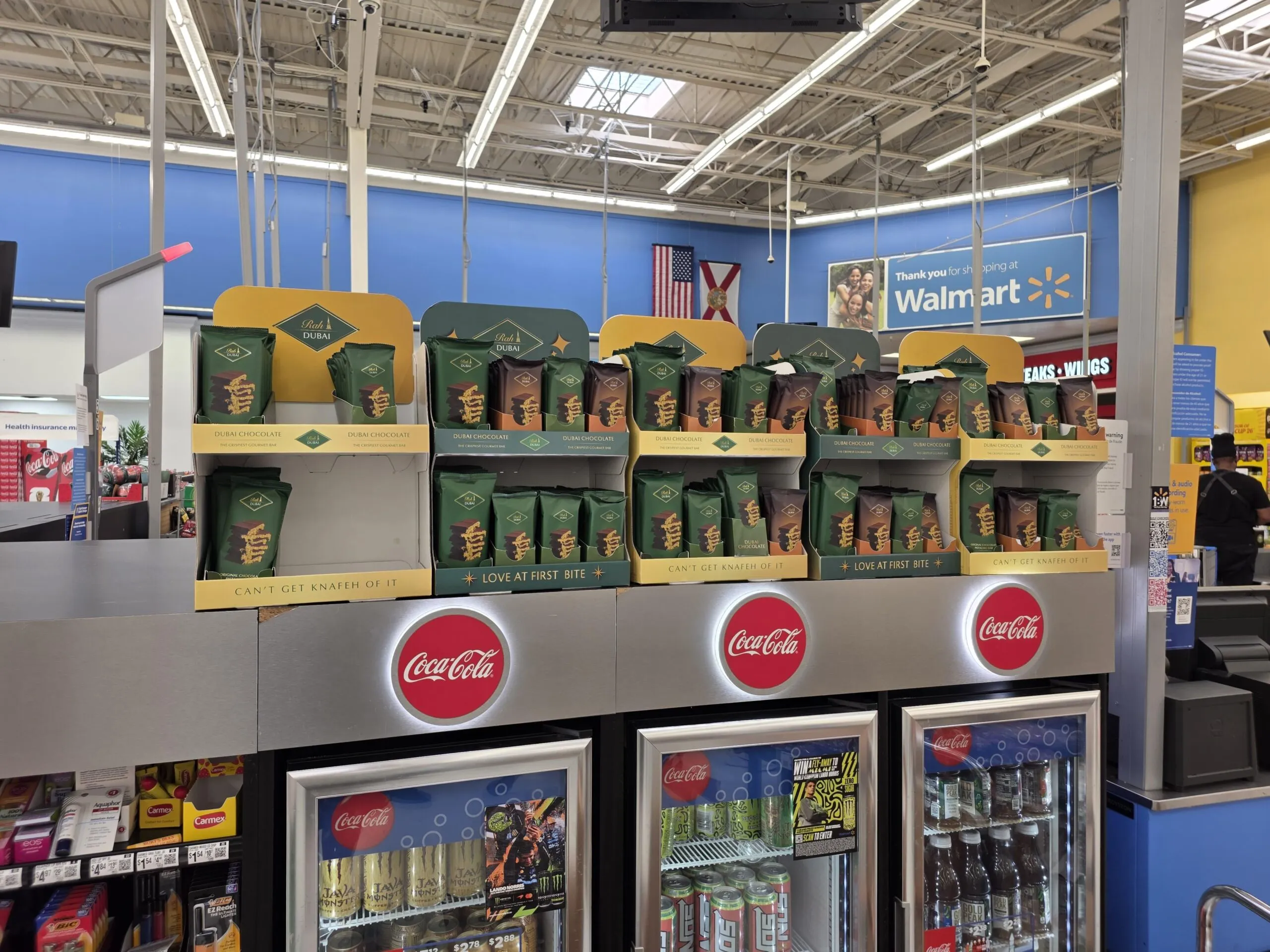

Corrugated vs. Coroplast: Which Material Is Better for Retail Displays?
They may look similar at a glance with their fluted core designs, but corrugated board and Coroplast are made from compl
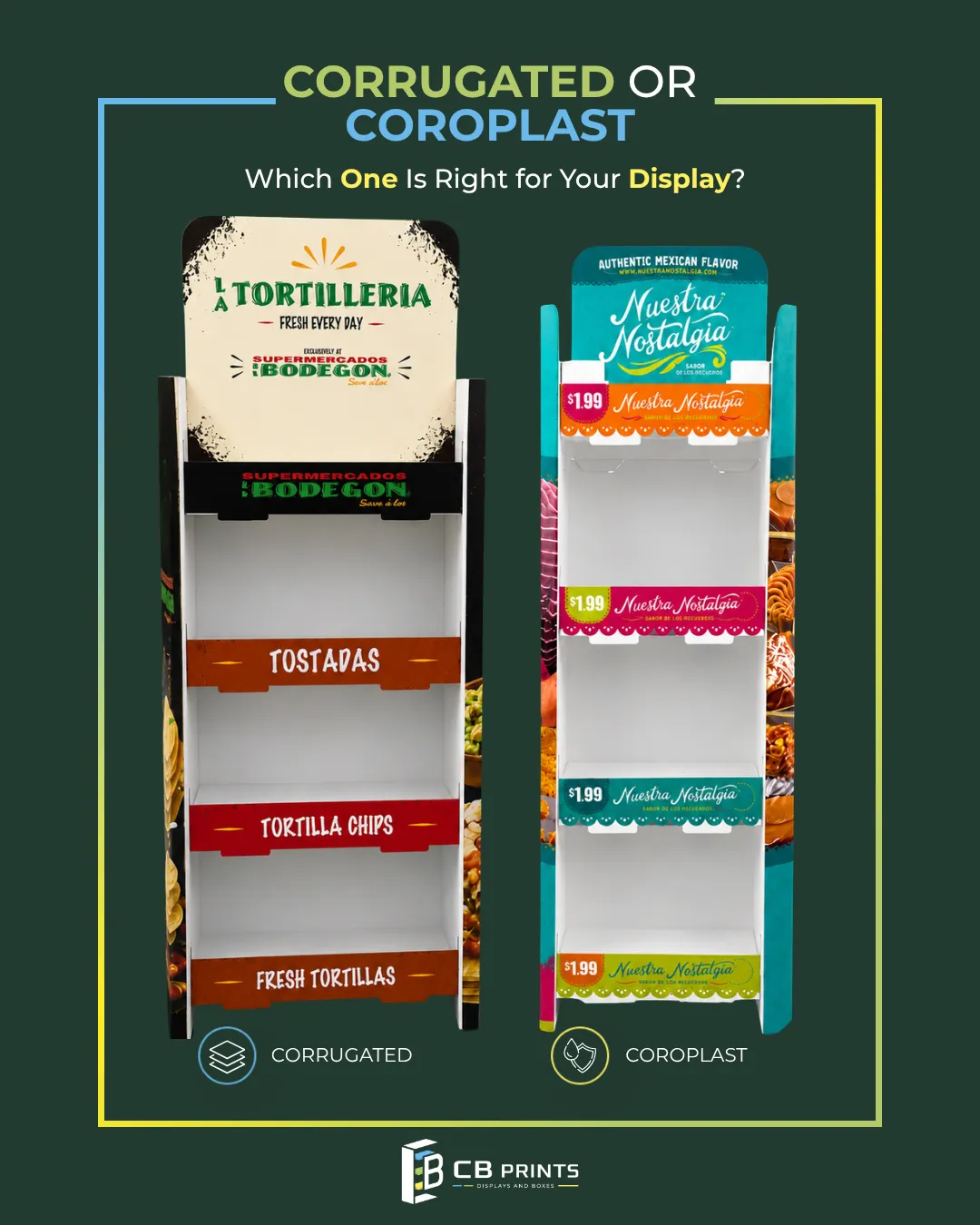
They may look similar at a glance with their fluted core designs, but corrugated board and Coroplast are made from completely different materials.
Choosing the wrong option for your point-of-purchase (POP) displays can lead to soggy marketing materials outdoors or bloated budgets indoors. Here is everything you need to know about corrugated vs. Coroplast to choose the perfect material for your next retail campaign.
Key Differences at a Glance (TL;DR)
Quick Summary: Corrugated cardboard is a cost-effective, 100% recyclable paper material ideal for temporary, high-volume indoor promotions. Coroplast is a rigid, waterproof polypropylene plastic ideal for long-term, outdoor, or high-moisture retail environments.
What Is Corrugated Board?
Corrugated board is a heavy-duty packaging material made from paper fibers. It features a fluted paper arch sandwiched between two flat linerboards, providing high structural rigidity while remaining ultra-lightweight.
Advantages of Corrugated Displays
- Cost-Effective for Scale: The most economical choice for short-term and seasonal promotions.
- Superior Print Quality: Accepts high-resolution lithographic, flexographic, and digital printing for vibrant, photo-quality brand graphics.
- 100% Eco-Friendly & Recyclable: Easily recycled through standard commercial paper recycling channels.
- Highly Customizable: Easy to die-cut into complex 3D floor displays, dump bins, and counter units.
Best Applications
- Temporary indoor retail promotions and endcaps
- Grocery store and supermarket floor displays
- Seasonal campaigns and product launches
- Lightweight counter-top display units
What Is Coroplast?
Coroplast (corrugated plastic) is extruded polypropylene sheet material. Built with a hollow structure similar to corrugated cardboard, it delivers similar structural stability but with the weather-resistant properties of solid plastic.
Advantages of Coroplast Displays
- 100% Waterproof: Impervious to rain, humidity, spills, and condensation.
- Durable & Reusable: Resists tearing, punctures, and impact, making it built to last for long-term campaigns.
- Easy to Clean: Can be wiped down repeatedly without degrading the display surface.
- Chemical & Chemical-Resistant: Ideal for harsh retail environments like garden centers or chemical aisles.
Best Applications
- Outdoor signage, lawn signs, and sidewalk displays
- Garden centers and outdoor nurseries
- Hardware stores and automotive display areas
- Cleaning product aisles subject to chemical spills
- Long-term, permanent indoor signage
Side-by-Side Material Comparison
| Feature | Corrugated Cardboard | Coroplast (Plastic) |
| Primary Material | Paper / Cellulose Fibers | Polypropylene Plastic (#5) |
| Best Environment | Indoor | Indoor & Outdoor |
| Water Resistance | ✘ Not Water Resistant | ✔ 100% Waterproof |
| Durability | Short-Term (Weeks to Months) | Long-Term (Months to Years) |
| Cost | $(Budget-Friendly) \vert{}$$ (Moderate) | |
| Recyclability | Curbside / Standard Paper | Plastic Recycling (#5 PP) |
| Reusability | Limited | High |
| Print Finish | Premium Matte/Gloss Paper | Flatbed UV Printed Plastic |
Decision Guide: Which Material Should You Choose?
Choose Corrugated Cardboard If:
- Budget is a priority: You need high volumes of displays produced at the lowest cost-per-unit.
- Your campaign is temporary: The display only needs to last a few weeks to a couple of months.
- It’s strict indoor use: You are displaying products inside a dry retail store or grocery aisle.
- Sustainability is a key metric: You want materials that consumers can easily recycle in standard paper bins.
Choose Coroplast If:
- Moisture or weather is present: The display will be used outdoors, near garden hoses, or in refrigerated sections.
- You need long-term durability: The display needs to stay up for several months or be reused across multiple promotional cycles.
- Hygiene and cleaning matter: You need to sanitize or wipe down the display routinely.
Frequently Asked Questions (FAQ)
Can Coroplast displays be recycled?
Yes, Coroplast is made from #5 polypropylene plastic and is 100% recyclable. However, unlike corrugated paper, it usually requires commercial plastic recycling streams rather than curbside paper pickup.
Is Coroplast stronger than corrugated cardboard?
Yes. Coroplast has higher tear resistance, puncture resistance, and tensile strength because it is made from plastic polymer rather than paper fibers.
Which material prints better for high-end graphics?
Corrugated cardboard generally offers sharper color depth and photo-realistic print finishes when using litho-laminated paper liners. However, direct-to-substrate UV printing on Coroplast provides clean, crisp, and fade-resistant graphics.
Need Custom Retail Displays for Your Brand?
Selecting the right material is the first step to a successful in-store campaign. Whether you need eco-friendly corrugated floor stands or weather-proof Coroplast signage, our display experts can help you design, print, and ship custom POP displays tailored to your brand goals.
Related Articles