
How Much Weight Can a Cardboard Display Hold? The Complete Engineering Guide
When launching a retail campaign, one of the first questions we hear from new customers is: "How much weight can a cardb

When launching a retail campaign, one of the first questions we hear from new customers is: “How much weight can a cardboard display hold?”
It is a great question, but most people are actually asking the wrong thing.
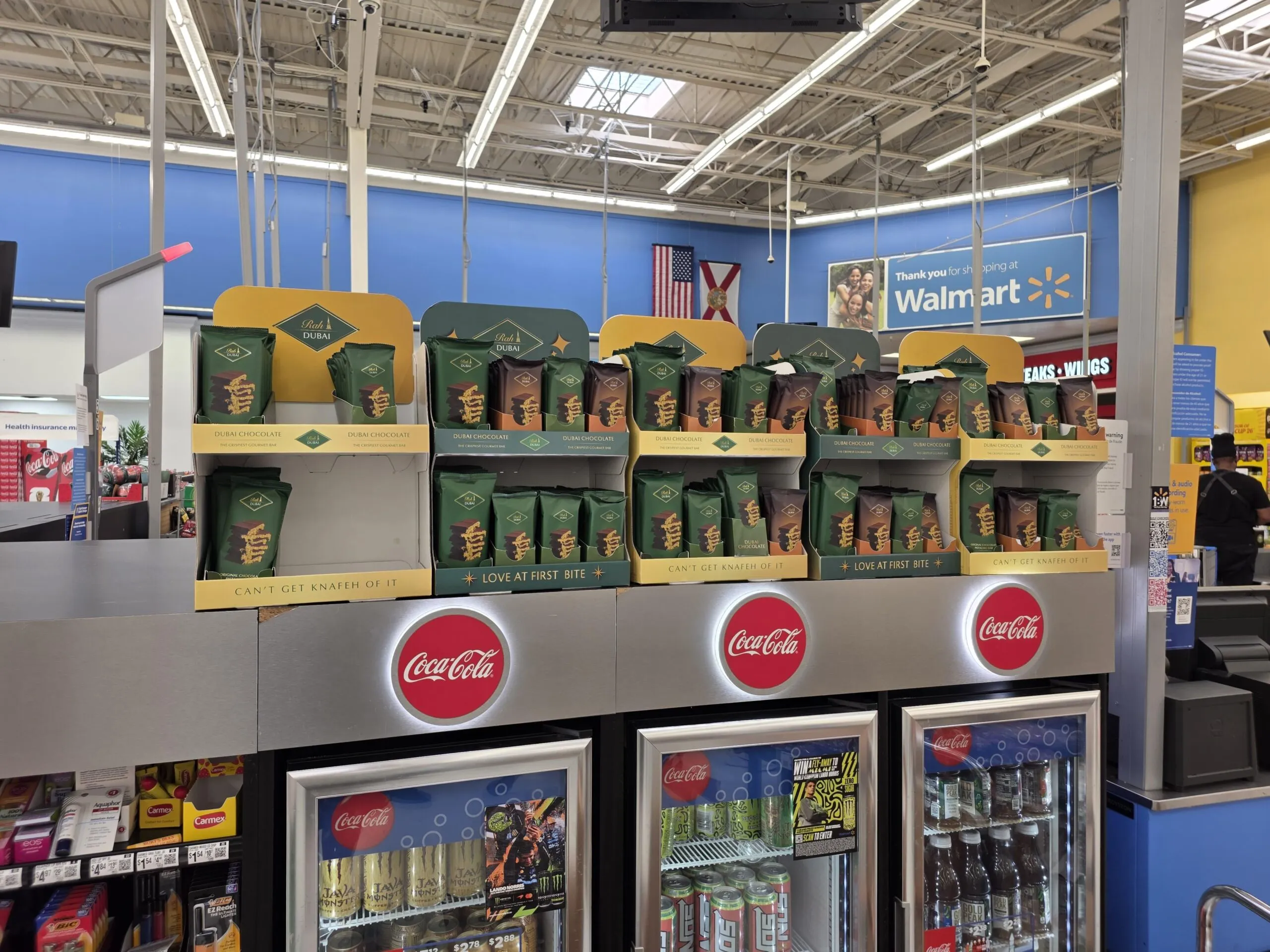
The answer isn’t a single, magic number. The weight capacity of a Point of Purchase (POP) retail display depends on several dynamic factors—not just the thickness of the material. A properly engineered cardboard display can support everything from lightweight snacks to heavy glass beverage bottles, industrial cleaning products, and bulk pet food.
The secret lies in choosing the right structural design paired with the right material. Here is exactly how it works.
What Determines a Display’s Weight Capacity?
Several structural and environmental elements work together to keep your products secure on the shelf.
1. Individual Product Weight
A floor stand designed for bags of potato chips requires a completely different architecture than one designed for craft beer bottles. The heavier and denser the individual product, the stronger the underlying support structure needs to be to prevent crushing.
2. Shelf Size and Span
Long, wide shelves carry more physical stress and are prone to “bowing” or sagging in the middle. Sometimes, reducing the shelf depth or width by just a few inches can exponentially increase its structural integrity and weight capacity without changing the material.
3. Total Load Capacity (The Math Matters)
It is crucial to calculate the combined weight, not just the single unit.
- Example A: 10 products × 1 lb = 10 lbs per shelf.
- Example B: 40 products × 1 lb = 40 lbs per shelf.
The display’s side walls and base must be engineered to support the cumulative weight of a fully stocked unit.
4. Material Selection
Not all substrates perform the same under pressure. Choosing the right one is critical for both function and budget.
| Material | Best Used For | Key Advantage |
| Corrugated Board | Snacks, bakery items, grocery, lightweight promotional products. | Highly cost-effective and offers the best print quality for retail graphics. |
| Honeycomb Board | Heavy beverages, automotive tools, large semi-permanent displays. | Incredible load-bearing capacity; mimics the strength of wood at a fraction of the weight. |
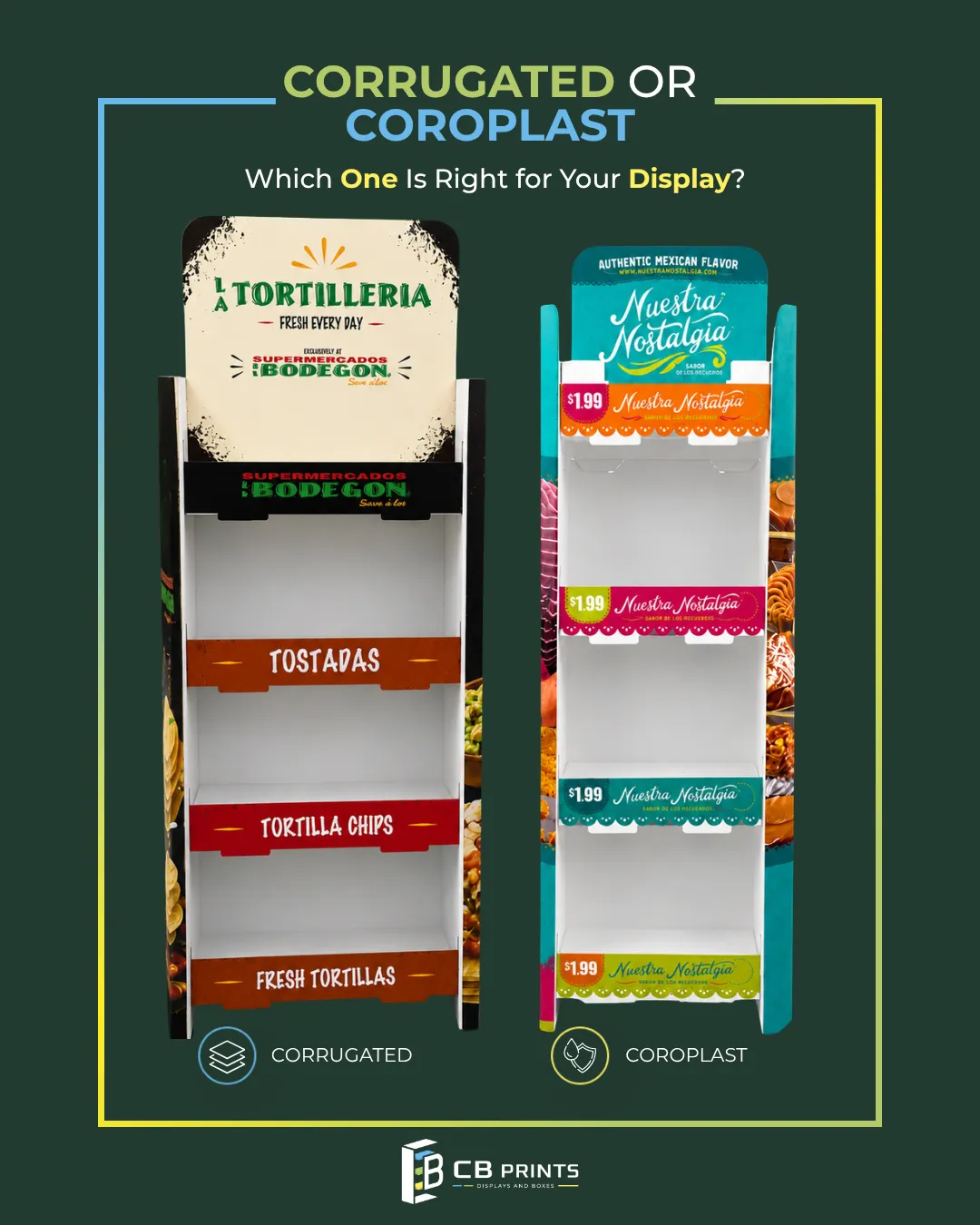
| Coroplast (Plastic) | Outdoor displays, garden centers, moist environments. | Waterproof and reusable; will not warp or lose strength in high humidity. |
Why Structural Engineering Matters More Than Material
A common misconception in retail marketing is that thicker, stronger material automatically equals a stronger display. This is not necessarily true.
A cleverly engineered corrugated display can easily outperform a poorly designed honeycomb display. Excellent structural design distributes weight evenly across the entire unit, utilizing load-bearing support beams and reinforced folds to prevent shelves from bending over time. It is about geometry, not just cardboard.
The CB Prints Checklist: Designing for Your Product
Before recommending a material or cutting a prototype, the engineering team at CB Prints evaluates the specific demands of your retail environment. Whether you are shipping displays nationwide or distributing them locally in (Note for GEO: Insert your primary city/region here, e.g., the local metro area), we always ask for:
- Product dimensions (Length, width, and height of the primary packaging).
- Product weight (Per individual unit).
- Quantity per shelf (How many facings).
- Total units per display (Fully loaded capacity).
- Retail environment (Supermarket, hardware store, outdoor event).
These details allow us to calculate the exact load requirements and recommend the most cost-effective, durable solution.
Need Help Securing Your Products?
You don’t have to guess your display’s weight capacity. We will recommend the exact structure and material based on your specific products—so your display performs exactly as expected on the retail floor.
Related Articles